Guide
Dark circles under the eyes: a medical guide
by Dr. med. univ. Maria-Theresa Thiede, Medical DirectorPublished 11 min read
Why dark circles form, how to recognise your own type and what really helps. From my practice, clearly explained.
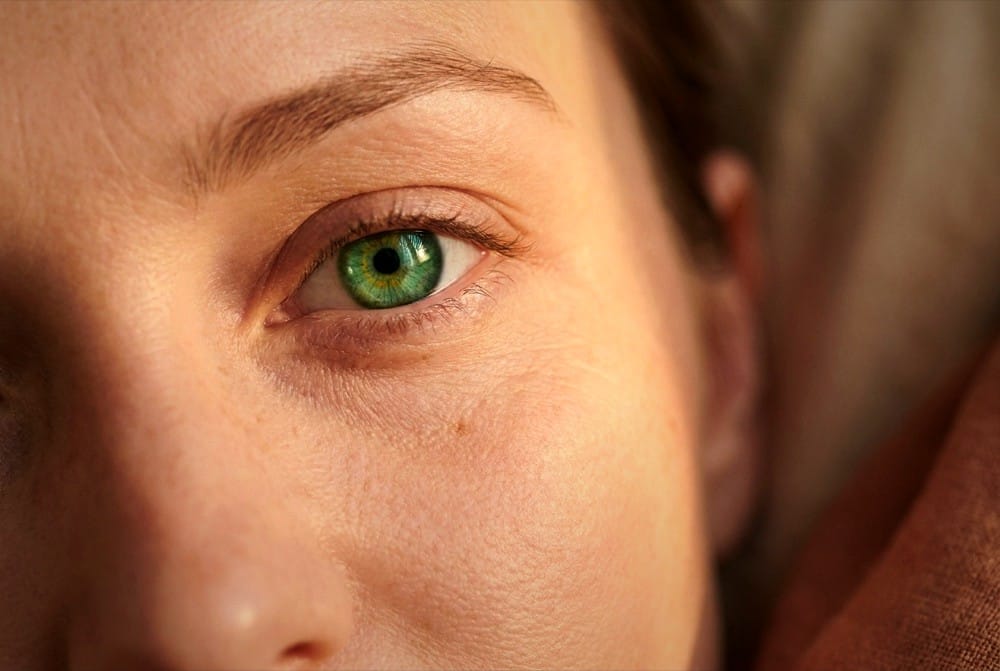
Hardly any question comes up in my practice as often as this one: "What can I do about my dark circles?" The internet offers hundreds of answers, from eye creams to fillers. Most of them share one problem: they treat all dark circles the same. Yet dark circles are not a single phenomenon. They form in different ways, in different layers of the skin, and that is exactly what decides what helps and what doesn't.
This guide is meant to help you understand your dark circles before you decide for or against a treatment.
Why the eye area is so delicate
At around half a millimetre, the skin under the eye is the thinnest on the face; on the cheek it is several times thicker. It has almost no fat beneath it, few oil glands, and it moves with every blink, many thousands of times a day.
Directly beneath it lie the ring muscle of the eye and a dense network of fine blood vessels. Under thick skin you see none of this. Under thin skin it shows through, much like thin paper held up to the light.
Below that lies the tear trough, a natural groove where the skin is attached more firmly to the bone than on the cheek. Where the tissue above it loses volume, this groove becomes a shadow.
These three levels, the skin itself, the vessels beneath it and the structure below, explain the different types of dark circles.
The four types of dark circles
The medical literature distinguishes four types. Most of my patients have several of them at once.
Pigmented dark circles
Here the skin itself is darker, brownish to greyish. The skin's pigment cells produce more melanin in this area. This often runs in families and is more common in darker skin types. Sun, frequent rubbing and skin inflammation, for example with eczema, intensify the colour.
Visible blood vessels
When the skin is particularly thin, blood vessels and the ring muscle show through in blue, violet or reddish tones. With tiredness, allergies or a blocked nose this becomes more visible, because the vessels fill with more blood. That is why these circles are stronger on some days than on others.
Shadow from volume loss
When the tear trough is deep, or the tissue above it has lost volume, a shadow forms. This is not a discolouration but a matter of light, which is why no cream helps here.
Mixed forms
Most often I see mixed forms, for example thin skin with visible vessels plus a slight shadow. That is why a single measure rarely solves everything, and why I often plan treatment in steps.
Which type do I have?
There are two simple tests you can do in front of the mirror.
The light test: Stand under a ceiling light, then face a window. If the dark circle becomes clearly weaker with light from the front, it is mainly a shadow: it comes from volume loss or a deep tear trough, not from a discolouration of the skin.
The stretch test: Gently pull the skin under the eye to the side with one finger. If the colour stays the same, it lies in the skin itself, which points to pigment. If it turns bluer or stronger, vessels are more likely showing through.
These tests give a first indication. A reliable assessment happens in the consultation: I look at the eye area in different light and use a skin analysis (OBSERV 520) that shows pigment and vessels in the skin separately.
What happens with age
Many people notice their dark circles becoming more visible over the years. Three reasons work together:
- The skin becomes thinner. From around the mid-twenties, the skin produces a little less collagen each year. The already thin eye area shows this first: the skin becomes crêpier and vessels show through more.
- The tissue loses volume. The fat pads under the eye shift or shrink, and the tear trough becomes more pronounced.
- Sun adds up. Over the years, UV light breaks down collagen and stimulates pigment production. The effects often only show many years later.
This also means dark circles are not a sign that something is wrong with you. Most of the time they are a mix of disposition and time.
Treatments at The Retreat
For me, every treatment starts with an assessment. Only once it is clear which type is in the foreground do I suggest anything. Sometimes the honest answer is that no treatment is needed. In my practice I treat the eye area regeneratively: I give the tissue what it needs to renew itself, rather than filling it.
The types of dark circles and the treatment I usually suggest
| Type | What I usually suggest | How good is the evidence? |
|---|---|---|
| Thin skin, vessels | Polynucleotides | first studies, follow-up up to 6 months |
| Pigment | Own blood (PRF) | first promising studies, more data so far on PRP |
| Volume loss, deep tear trough | PRF filler from your own blood | for mild volume loss, after careful assessment |
| Mixed form | Combination, timed in sequence | depends on assessment |
Polynucleotides: when the skin itself is the issue
What it is: Polynucleotides are a highly purified preparation of DNA building blocks. In the skin they stimulate collagen production and improve skin quality without adding volume. I use PolyPhil Eye by Croma, which is formulated at a lower concentration for the thin skin around the eyes.
Who it is for: thin, crêpey skin under the eye and visible blood vessels. Denser skin lets vessels show through less.
What to expect: After a numbing cream, I place fine injections along the lower eyelid as a series of small deposits. The session takes about 20 minutes. Small bumps at the injection points usually settle within one to three days. Make-up is possible from the next day.
How many sessions: usually two to four, 14 to 21 days apart, depending on the assessment. The result is judged after the full course; after that I recommend a refresher every six to nine months.
What the studies say: A systematic review from 2026 shows short-term improvements in fine lines and skin quality around the eyes, with good tolerability. The studies are still small and follow patients for six months at most.
More: Polynucleotides for the eye area
Own blood (PRF): when pigment is in the foreground
What it is: From a small blood sample, about 10 to 30 millilitres as in a routine blood test, we obtain a concentrate of platelets and the body's own growth factors in around ten minutes. PRF releases these growth factors into the skin slowly over several days.
Who it is for: brownish, pigment-related dark circles, including when the skin is also thin.
Treatment and sessions: The concentrate is applied to the skin fresh. For the eye area I usually plan two to three sessions, four to six weeks apart. Redness or slight swelling usually settles within a few hours.
What the studies say: For own-blood treatment of pigment, there are more studies so far with PRP, the liquid form. PRF is the newer method, and the first studies are promising: in a 2026 comparison study, both forms improved pigmentation under the eye, and with PRF melanin decreased more evenly. The studies are still small. On request I also work with PRP. Because the material comes from your own body, there is no risk of an allergy to foreign material. Sun protection remains the foundation, otherwise the pigment returns.
PRF filler: when the tear trough is deep
What it is: A gel is prepared from your own blood that gives gentle, natural volume support, without synthetic fillers.
Who it is for: a deep tear trough or volume loss under the eye with a tired look, and only after careful assessment. For eye bags caused by protruding fat, it is not the right choice, and I will tell you so.
What to know realistically: PRF filler is not a one-to-one replacement for a classic filler. How long the effect lasts varies from person to person and cannot be promised in general.
Combining, but one step at a time
For mixed forms I combine treatments, for example polynucleotides for the skin and own blood for pigment or a deep tear trough. I plan them in sequence rather than all in one session, so the skin has time to respond and we can see what each treatment does.
Which type is in the foreground for you is something we clarify in the consultation.
Book a consultationWhy I don't use hyaluronic acid filler under the eyes
Many people who come to me first searched for "filler for dark circles" and mean hyaluronic acid. I deliberately do not use hyaluronic acid filler in the eye area.
A hyaluronic acid filler in the tear trough can produce a nice result at first. However, the eye area is anatomically particularly demanding: the skin is very thin, the tissue is delicate and lymphatic drainage is comparatively easily disrupted.
Hyaluronic acid has a strong capacity to bind water. Injected in this area, it can bind water in the tissue and so encourage persistent swelling, known as puffy eyes. Delayed swelling, visible irregularities and the so-called Tyndall effect, where the filler shows through the thin skin with a bluish tint, are also known possible complications.
That is why we deliberately do not use classic hyaluronic acid fillers under the eyes. Instead of adding volume, we take a regenerative approach: with polynucleotides we support skin quality and tissue regeneration. We use PRF (platelet-rich fibrin) as a treatment from your own body, to stimulate regenerative processes and improve skin structure.
Our aim is not to fill the eye area artificially, but to support the skin's natural quality and to encourage a fresh, harmonious appearance over the long term.
Daily habits, skincare and lifestyle
No treatment replaces the basics. They help as prevention and alongside any treatment:
- Sun protection, every day. Around the eyes too, with a product suitable for the eye area, and with sunglasses on very sunny days. This is the single most effective measure against pigment and collagen loss.
- Don't rub. Frequent rubbing, for example with itchy eyes from an allergy, can intensify pigmented dark circles. That is why it is worth having an allergy treated.
- Sleep. It does not remove dark circles you are predisposed to, but it makes visible vessels less noticeable.
- Salt and alcohol in the evening encourage morning puffiness, which deepens the shadow under the eye.
- Don't smoke. Smoking speeds up collagen loss, including around the eyes.
- Skincare. Good eye care can strengthen the skin and slightly lighten superficial pigment. With vessels and shadows it reaches its limits, because the issue lies in or beneath the skin, not on it.
- General health. Iron deficiency or other conditions can also make the skin look sallow. If dark circles appear newly or you also feel exhausted, a blood test with your GP can be worthwhile.
When to see your doctor first
Dark circles are almost always harmless. Please have them checked by your GP first if they appear suddenly, only on one side, if swelling, pain or vision problems occur, or if you feel exhausted all the time. An aesthetic treatment is then only the second step.
Frequently asked questions
What really helps against dark circles?
It depends on the type. Sun protection always helps. For thin skin, polynucleotides can improve skin quality; for pigment, own-blood treatment (PRF) is an option; for a deeper tear trough or volume loss, PRF filler.
Do dark circles go away on their own?
Dark circles from tiredness or allergies fade with sleep and allergy treatment. Dark circles from pigment, thin skin or volume loss usually remain.
Can dark circles be removed permanently?
No, that would be a dubious promise. The skin keeps ageing. A treatment can improve the appearance; a refresher is usually advisable after a few months.
Does the treatment hurt?
Before injections near the eyelids I apply a numbing cream. Most people describe a slight pulling or feeling of pressure. The blood draw for own-blood treatment is the same as a routine blood test.
Do men have different dark circles from women?
The causes are the same, and I proceed the same way with men: first the assessment, then the recommendation.
Sources
Show sources (9)
- Samaan CB, Cartee TV. Treatment of Periorbital Vascularity, Erythema, and Hyperpigmentation. Clin Plast Surg. 2023;50(3):399-409. doi:10.1016/j.cps.2022.12.005
- Pissaridou MK, Ghanem A, Lowe N. Periorbital Discolouration Diagnosis and Treatment: Evidence-Based Review. J Cosmet Laser Ther. 2021;22(6-8):217-225. doi:10.1080/14764172.2021.1899238
- Beer J et al. What's New With Under Eye Treatment: A Multispecialty Systematic Review. Dermatol Surg. 2026;52(2):155-163. doi:10.1097/DSS.0000000000004964
- Ahuja R et al. Efficacy of Polynucleotides in Periorbital Rejuvenation: A Systematic Review. Aesthet Surg J Open Forum. 2026;8:ojag200. doi:10.1093/asjof/ojag200
- Ziade G et al. Prospective Observational Study of Polynucleotide Injections for Periorbital Rhytides. J Cosmet Dermatol. 2026;25(2):e70736. doi:10.1111/jocd.70736
- Sollitto CF et al. A Systematic Review of Platelet-Rich Plasma Versus Platelet-Rich Fibrin for Periorbital Rejuvenation. J Cosmet Dermatol. 2025;24(11):e70524. doi:10.1111/jocd.70524
- Tai K et al. Platelet-Rich Plasma and Platelet-Rich Fibrin in Periorbital Esthetics: Systematic Review. Facial Plast Surg Clin North Am. 2026;34(3):365-394. doi:10.1016/j.fsc.2026.04.001
- Behrangi E et al. Comparing the Efficacy and Safety of PRP and PRF on Periorbital Skin Quality: A Randomized Split-Face Clinical Trial. J Cosmet Dermatol. 2026;25(6):e70971. doi:10.1111/jocd.70971
- Liu X et al. The Efficacy and Safety of Hyaluronic Acid Injection in Tear Trough Deformity: A Systematic Review and Meta-analysis. Aesthetic Plast Surg. 2024;48(3):478-490. doi:10.1007/s00266-023-03613-7
Medically reviewed by Dr. med. univ. Maria-Theresa Thiede, Medical Director. As of 18.11.2026. Results vary from person to person. This page does not replace medical advice.
Your eye area in a consultation
In the consultation I look at your eye area, we work out together which type is in the foreground, and you get an honest assessment of whether a treatment makes sense, and which one.
Read on